
Do you often feel anxious? Are you dealing with unresolved trauma? Do you constantly feel emotionally overwhelmed? Does it feel like your mind races through a billion things at once, spirals into the past, or disconnects from reality completely?
If you answered “yes” to any of these symptoms, grounding technique can help you feel better. Grounding techniques are simple, gentle practices that help you reclaim control and reconnect with the present.
Grounding doesn’t force you to magically be calm or disregard your emotions. Instead, it is aimed at creating stability and asserting your presence when things feel unstable and out of control. These techniques help you by providing your nervous system with a sense of safety in the midst of internal chaos.
Here’s a step-by-step guide designed to help you ground yourself wherever you are:
Step 1: Pause and Notice
First, take a brief pause. Notice what’s happening and recognize how you feel.
Start by asking yourself:
- Do I feel anxious? Overwhelmed? Disconnected?
- Does my body feel tense, numb, restless, or far away?
- Do my thoughts feel fast or scattered?
The ability to notice that something feels off is enough. Awareness is key when it comes to grounding.
Step 2: Remind Yourself You’re Here
Gently remind yourself by saying these affirmations in your head or out loud:
- “I am here in the present moment”
- “I am in a safe environment to pause”
- “It’s okay to not feel okay right now”
- “I am in control of my thoughts”
These affirmations help remind you that you are in the present moment.
Step 3: Choose A Grounding Technique
There are many grounding techniques out there. However, grounding works best when it’s simple and straightforward. You should start by choosing one approach based on what feels most accessible right now.
Here are some grounding techniques you can choose from:
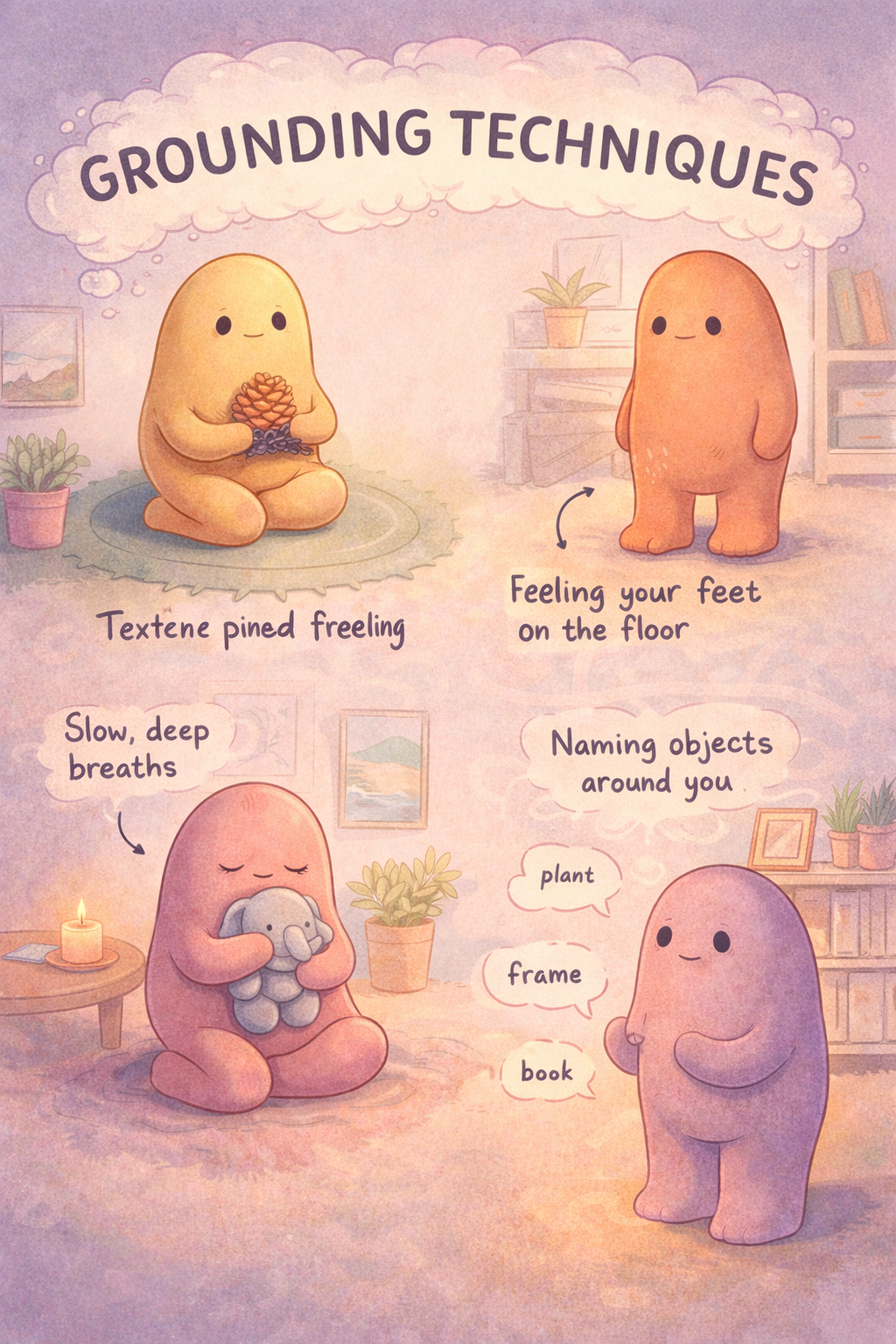
Ground Through Your Senses
You can start by engaging with your environment through this techniques to make yourself aware of your surroundings:
- Name three things you can see, two things you can feel, and one you can hear
- Hold something textured or familiar and focus on it
- Focus on a steady sound nearby or focus on your breath
Through Your Body
Another way to ground yourself is by reconnecting with physical sensations:
- Press your feet into the floor and notice the support beneath you. Make sure to keep your balance
- Stretch, walk around, and/or gently move your body
- Place your hand on your chest and notice your breath
Through Your Thoughts
Grounding is about focus. You can find something for your mind to steadily focus on by:
- Describing your immediate surroundings in detail
- Name the colors you notice around you
- Repeat a grounding phrase such as “I am here right now” or any others listed in Step 2
Step 4: Stay With It Briefly
You don’t need to wait for anxiety to disappear. Instead, you can be in control.
Try:
- Stay with the grounding practice for 30–60 seconds
- Notice any small shift, even if it’s subtle
- Gently return to the exercise if your mind wanders
Grounding isn’t about immediate relief. It’s about anchoring yourself to the present moment.
Step 5: Practice Beyond Moments of Crisis
Grounding techniques work best when practiced regularly, not only during distress. Many people use grounding when they are anxious, dissociating, emotionally overwhelmed, overstimulated, or struggling to focus.
Practicing grounding during calmer moments makes it easier to access when you need it most.
Step 6: Build a Practice That Fits You
Grounding is a skill, not a switch. What helps most is compassion and consistency.
You might try pairing grounding with daily routines, practicing without expecting instant relief, and noticing what feels supportive rather than what you think “should” work. Even small moments of grounding add up over time.
How ShareWell Supports Grounding and Presence
At ShareWell, we know staying present can be difficult when anxiety or emotional overwhelm takes over. That’s why our peer support groups and spaces focus on shared presence and gentle structure to help you feel grounded.
Through our popular body doubling sessions, peer accountability groups, and more, members can experience calm connection without pressure. Sitting quietly alongside others, even if it’s virtual, can help the nervous system settle and make the present moment feel more accessible.
Grounding is more than just the techniques listed above. It’s about connection, support, and feeling understood. At ShareWell, we believe grounding can become something you return to again and again.
Learn more about Grounding Techniques: https://sharewellnow.com/glossary/grounding-techniques
Join a Support Group: sharewellnow.com/online-support-groups
Join an Expert Coaching Group: https://sharewellnow.com/expert-coaching-groups
Leave a Reply