
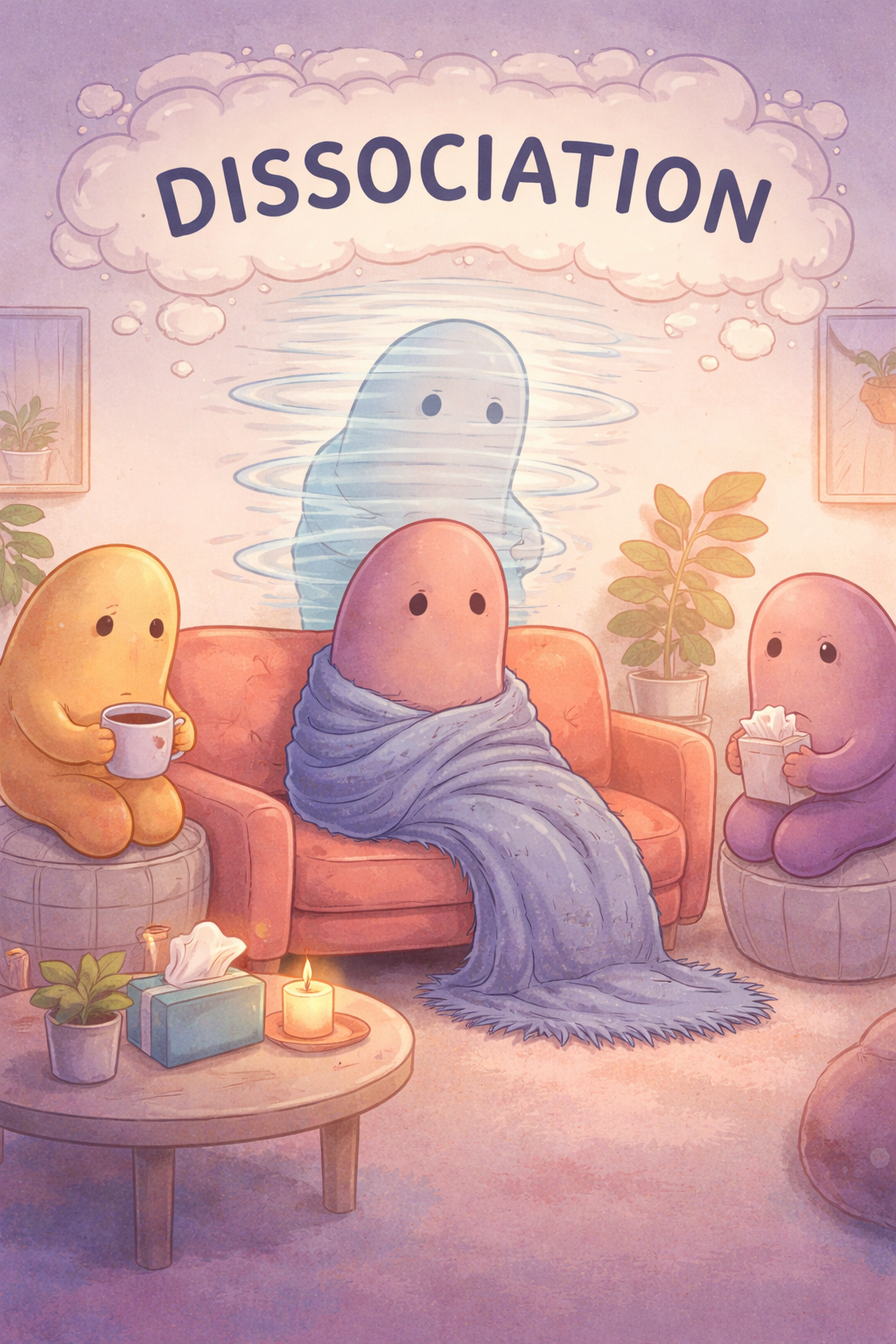
Tell me if this resonates: You feel like you’re here, but not fully here…
It’s a difficult sensation to describe, but you feel disconnected from reality, from others, and even yourself, and you just can’t explain why. Maybe you feel numb and feel like you’re constantly zoning out unintentionally.
If you’ve been feeling like this, don’t worry. You’re not alone, or broken. You’re most likely dissociating.
That Strange, Hard-to-Explain Feeling
Dissociation isn’t always obvious. Sometimes it’s so subtle that you wonder if you’re dreaming.
Here are some things you may notice when you’re dissociating:
- A sense of emotional distance
- Feeling disconnected from your body
- Losing track of time
- Trouble staying present
- The world feeling foggy or unreal
Nothing looks wrong from the outside, but inside, something just feels off, and you can’t quite put a finger on why.
What exactly is Dissociation?
When you feel overwhelmed, your nervous system compensates by protecting you through dissociation. Your brain creates distance instead of being present to establish almost a “safety net”.
Dissociation is a mental process where you disconnect from your thoughts, feelings, memories, or sense of identity, often as a coping mechanism for overwhelming stress or trauma, ranging from mild “spacing out” to severe memory loss or feeling unreal. I
t’s a break in the connection between your consciousness, memory, and perception, leading to feeling detached from yourself (depersonalization) or your surroundings (derealization).
It’s not a failure nor a weakness.
It’s simply a learned survival response.
People typically experience dissociation when they have high stress, anxiety, burnout, and/or when they go through emotionally intense experiences even if they’re not fully aware of it.
Why Do I Feel Disconnected Without Knowing the Cause?
At times, your body remembers what your mind may not.
Dissociation often happens when you’re going through one or more of these experiences:
- Emotions felt unsafe to express
- Stress lasted longer than your system could tolerate
- You had to stay “functional” despite overwhelm
- Being present once felt too painful
Over time, you subconsciously disconnect because it feels like the safest option to escape from your problems.
What is Depersonalization and Derealization?
Dissociation is linked with these two similar experiences:
- Depersonalization: Feeling detached from yourself or your body
- Derealization: Feeling detached from the world around you
Both are key symptoms of dissociation. You may experience one or even both.
What Do I Do When I Feel Disconnected?
Coming back to reality doesn’t have to be forceful. Your nervous system responds best to gentleness. Grounding Techniques are helpful when you’re dissociating.
Here are some grounding techniques you can try:
- Noticing physical sensations like your feet on the floor
- Naming objects you can see around you
- Holding something textured or cold
- Slowing your breath and extending the exhale
- Reminding yourself out loud that you’re safe right now
What if the Feeling Doesn’t Go Away
If dissociation happens often or affects your relationships, work, or sense of self, support can help. Trauma-informed and body-based therapies focus on helping your nervous system feel safe again.
You deserve care that honors what your body has been through.
I’ve addressed that I’m dissociating. What now?
Sometimes just talking about these feelings can be healing. That’s where Sharewell comes in. It’s a supportive space where you can share your experiences, connect with others who understand, and find validation without judgment.
You don’t have to navigate dissociation alone. Sometimes, the first step toward feeling grounded is simply being heard.
Learn more about Dissociation: https://sharewellnow.com/glossary/dissociation
Learn more about Grounding Techniques: https://blog.sharewellnow.com/2026/01/11/grounding-techniques-for-anxiety/
Join a Support Group: sharewellnow.com/online-support-groups
Join an Expert Coaching Group: https://sharewellnow.com/expert-coaching-groups
Leave a Reply