
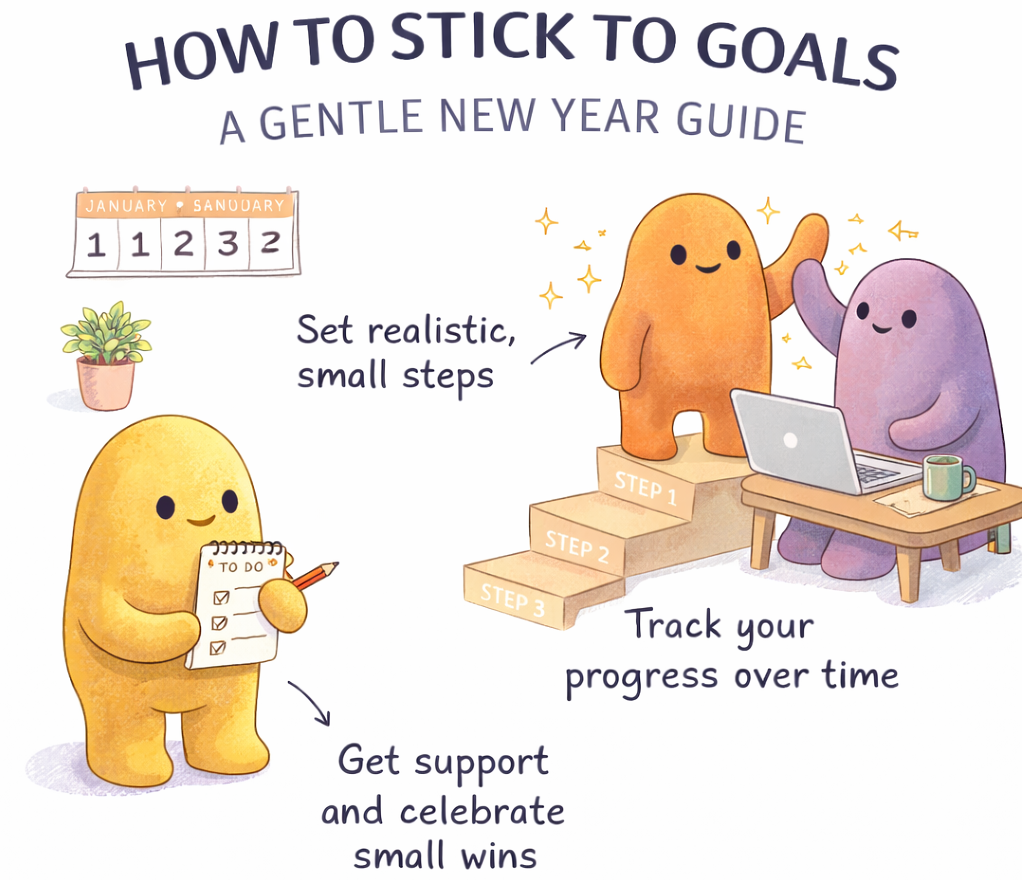
The New Year brings a natural urge to start fresh. We think about the changes we want to make, the habits we want to form, and the “better version” of ourselves we want to become.
But if you’re like many people, making goals is easy. Sticking to them is the hard part. You may set ambitious resolutions, only to feel lost or overwhelmed by February or even sooner.
Don’t worry or beat yourself up. This doesn’t mean you’re lazy or incapable. It simply means your brain and your life need a gentle, realistic approach to goal setting.
Why It’s Difficult to Stick to Goals
Setting goals isn’t just about willpower. It’s about connecting your intentions to action in a way that actually works for your brain.
Many people struggle because:
- Goals are too big or vague: “Get healthy” or “be more productive” doesn’t give your brain a clear starting point.
- Time feels slippery: If you lose track of time or underestimate how long tasks take, it’s easy to fall behind.
- Emotions get in the way: Stress, anxiety, or self-doubt can make goals feel unattainable.
- Lack of accountability or support: It’s easier to drift when no one is helping you stay grounded.
Even with the best intentions, without a framework, your goals can feel like distant dreams instead of achievable steps.
How to Actually Make Goals That Stick
Goal setting can work if you approach it with clarity, structure, and self-compassion.
Here are some ways you can succeed in accomplishing your goals:
1. Break Goals Into Small, Actionable Steps
Big goals are intimidating. Instead of “write a book,” start with “write 200 words today.” Small steps build momentum and make your brain feel capable.
2. Make Time Tangible
Use reminders, alarms, or a visual schedule to help anchor your goals in reality. Techniques like time blocking or the Pomodoro Technique create boundaries and make progress measurable.
3. Pair Goals With Support
Working alongside others can help keep goals visible and achievable. Accountability partners, peer groups, or online co-working sessions (like body doubling) can make a huge difference.
4. Reflect and Adjust Regularly
Check in on your progress at the end of the day or week. Celebrate wins, tweak what isn’t working, and treat setbacks as learning opportunities instead of failures.
5. Focus on Connection, Not Perfection
Your goals aren’t about being “perfect.” They’re about moving steadily toward something meaningful. When you approach them gently, your brain is more likely to cooperate—and less likely to rebel.
How ShareWell Helps You Reach Your Goals
At ShareWell, we help people turn goals into doable steps in a supportive environment. Our virtual co-working sessions and peer accountability groups provide structure, presence, and encouragement, which is perfect for anyone who struggles with focus, executive function, or motivation.
In our Body Doubling Sessions, members work quietly alongside one another. Everyone focuses on their own goals, yet shares the same calm, grounding energy. There’s absolutely no judgment and no pressure. We’re here for mutual support and understanding.
Because goal setting isn’t about forcing yourself to achieve more. It’s about being seen, supported, and reminded that you’re not alone in how you work toward your goals.
At ShareWell, we believe the New Year doesn’t have to be a race. Your goals can be steady, supported, and your own, one small, meaningful step at a time.
Learn more about Goal-Setting: https://sharewellnow.com/glossary/goal-setting
Join a Support Group: sharewellnow.com/online-support-groups
Join an Expert Coaching Group:https://sharewellnow.com/expert-coaching-groups
Leave a Reply