
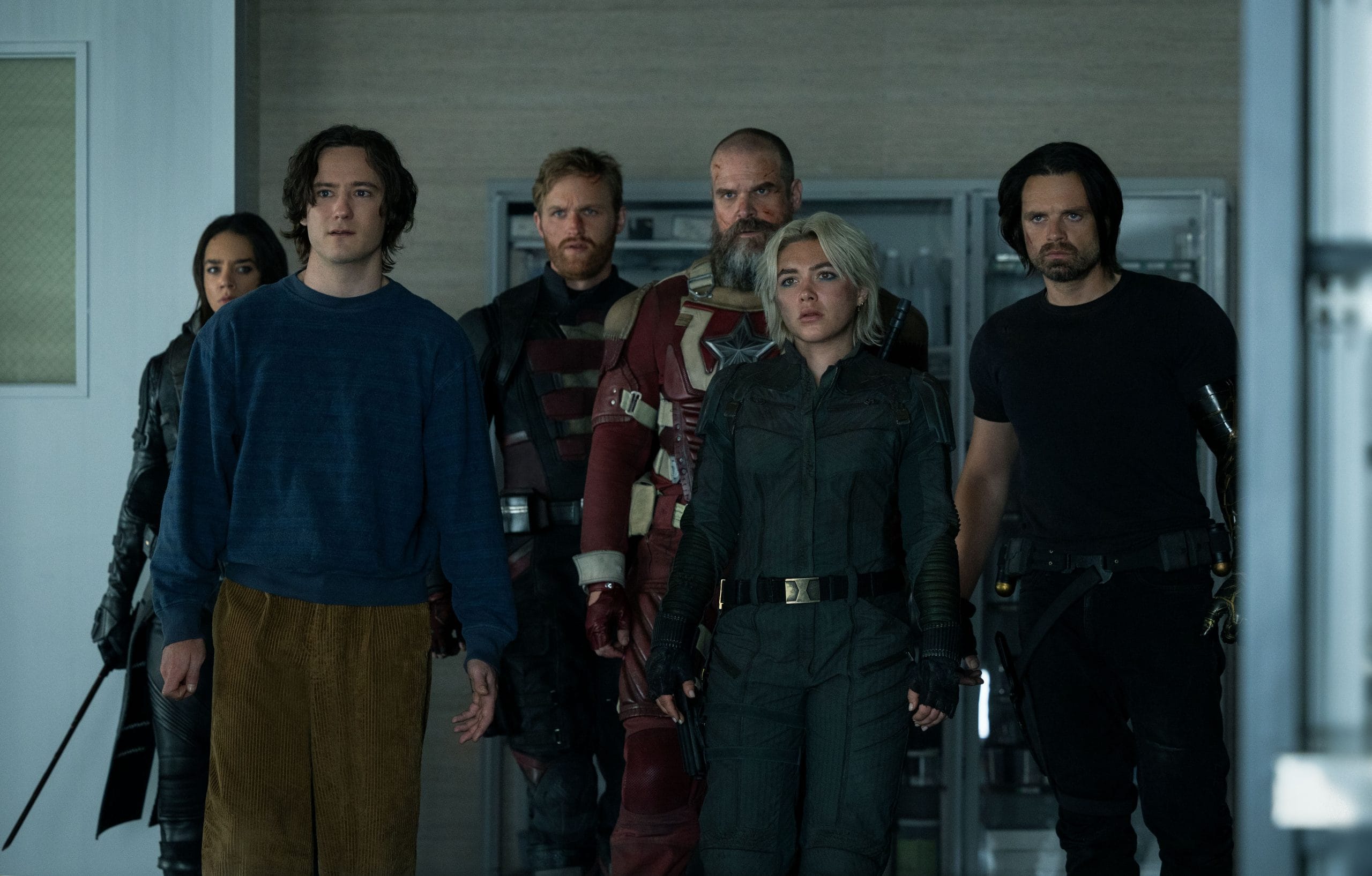
Unlike every Marvel movie, Thunderbolts focuses on something typically not associated with superheroes: trauma and mental health. Every character comes from a messed-up situation, flawed and carrying their own psychological battles. Each is trying to find meaning in the middle of grief, loss, and identity struggles.
This isn’t a story about perfect heroes. It’s about the messy, human process of healing.
(Warning: spoilers ahead!)
Bob: Carrying Trauma and Learning Balance

Bob is powerful, but most of his struggle is internal. He’s lived through serious trauma: an abusive childhood and a medical trial that took advantage of him. Now he’s carrying two versions of himself, one that wants to help and another that wants to disappear.
People sometimes only see the extremes, but in between, he’s just a guy trying to stay balanced. He’s figuring out how to manage his emotions without letting them take over.
Yelena: Grief That Lives in the Silence

Yelena’s grief isn’t loud. It shows up in the space between things, the way she pulls back, or how she avoids talking about her sister, Black Widow. She hasn’t spoken to her dad in a year, and it’s not a dramatic fallout. It just hurts too much.
When you’ve lost someone close, especially suddenly, it can make everything else feel far away. Yelena isn’t trying to be distant, she’s still trying to connect and find new purpose.
Walker: The Pressure of Holding It Together

Walker’s not just struggling with what happened as Captain America. He’s also dealing with everything that came after: losing the title, losing trust, losing his marriage.
He looks like he’s managing, but behind the scenes, he’s fighting something deeper. Sometimes the pressure to “be okay” is the very thing that makes it worse. You don’t have to fake it.
Bucky: Stuck Between Chapters

Bucky’s trying to figure out who he is without the war, without Steve, without someone telling him what to do next. He’s a congressman, but you can tell he’s not really into it.
He’s not angry, he’s just tired. There’s a quiet disconnect in him, like he’s doing everything right on paper but still feels off. A lot of people relate to that: life keeps going, but you still feel stuck somewhere your body already left.
Alexei: Searching for What Comes Next

Alexei doesn’t hate his life. He just doesn’t know what to do with it anymore. He used to feel important, like he had a role to play. Now he feels like someone people forget was ever part of the story.
He covers it up with jokes and old war stories, but underneath, he’s wondering what comes next. Many people feel that way after a big chapter ends, when there isn’t something new to give life structure.
Ghost: Learning How to Be Around People Again

Ghost moves like someone who doesn’t expect to be around for long. Her powers are unstable, and so is her relationship to other people. She’s been through a lot, most of it alone, and it shows.
She’s not cold, just careful. When you’ve been dealing with pain for most of your life, letting someone get close starts to feel risky. In Thunderbolts, she’s slowly learning how to be around people again.
The Thunderbolts: Healing Through Connection
The Thunderbolts aren’t built like most teams. They weren’t chosen for chemistry, shared values, or even trust. They’re a collection of bad starts: people with messy histories, unfinished healing, and more regrets than resolutions.
That’s what makes them interesting. They argue, they annoy each other, and they don’t always trust one another, but slowly, they start filling in the gaps for each other.
The film reminds us: you don’t need to be fully healed to be part of something meaningful. Sometimes you just need people who won’t let you do it all alone. (A persistent Red Guardian helps too 🙂).
Final Thoughts
Thunderbolts isn’t just another Marvel action flick, it’s a story about trauma, grief, and the long process of healing. These flawed heroes are messy, human, and relatable in ways we don’t usually see on screen.
By putting mental health at the center of a Marvel movie, Thunderbolts breaks new ground, and reminds us that even when you’re not okay, you can still find belonging and purpose.
Join a Support Group: sharewellnow.com/online-support-groups
Join an Expert Coaching Group: https://sharewellnow.com/expert-coaching-groups
Leave a Reply