
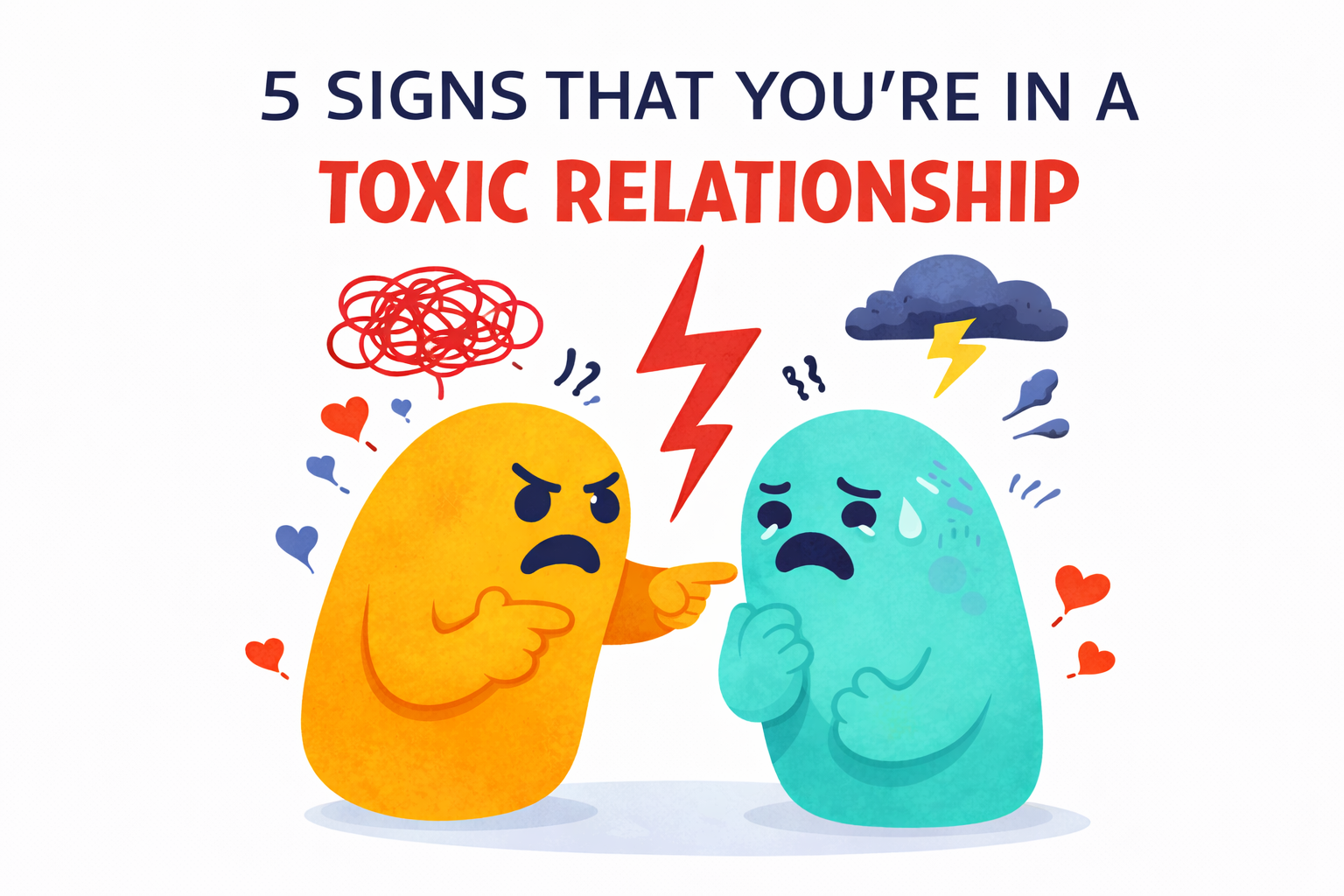
Toxic relationships don’t always start out feeling toxic. In fact, they often begin with intense connection, chemistry, and emotional closeness. Toxic relationships aren’t dangerous because of a couple bad arguments or temporary emotional disconnect. They can spiral overtime into a repeating pattern of insecurity that can slowly drain your sense of self, safety, and clarity. If you’ve ever felt confused, emotionally exhausted, or unsure of whether your discomfort is reasonable, these common signs of a toxic relationship may help you identify your situation.
1. Your Feelings Are Regularly Invalidated

Do you often hear phrases like “you’re being dramatic,” “you’re too sensitive,” or “that’s not a big deal”? This could be an indicator of a toxic relationship. In a toxic relationship, emotions aren’t welcomed. They’re minimized and forgotten. When you express hurt or discomfort, instead of addressing your needs, you’re met with responses that aim to fix your reaction, not the problem. Over time, you may start questioning whether your emotions are reasonable at all, slowly disconnecting from your own emotional truth and rational sanity.
2. You Constantly Monitor Yourself Around Them

Toxic relationships feel tense even during “good” moments. You might find yourself carefully choosing words, replaying conversations in your head, or adjusting your behavior to avoid upsetting them.
This is self-surveillance, not compatibility. When you feel like one wrong move could trigger conflict, anger, or withdrawal, the relationship stops being a place of comfort and becomes a source of stress. You start to lose your sense of self and cater your every action to them instead of yourself. You should not feel like you’re walking on eggshells when you’re in a relationship.
3. You are Blamed for Every Issue

Trying to address problems in a toxic relationship often leads nowhere. When you bring up a concern, the conversation quickly flips. You’re painted as the selfish one who “starts all the drama” and are scolded for “being difficult”.
Accountability is replaced with defensiveness and blame. They fail to take responsibility for their wrongdoings, and you end up apologizing for being hurt, learning that speaking up only makes things worse. Over time, this conditions you to stay quiet even when something feels deeply wrong.
4. The Relationship Runs on High Highs and Low Lows

Emotional inconsistency is a confusing but sure sign of a toxic relationship. At one moment you may feel intense closeness, affection, reassurance, and feel loved and connected. However, these moments are short lived and often followed by distance, emotional disconnect, lack of affection, and coldness.
This highly unstable push and pull dynamic creates emotional dependency. You hold on to the highs to justify the lows, mistaking intensity for love. Furthermore, this may lead to an unregulated nervous system that makes your body feel like it’s constantly in fight or flight mode. Genuine, healthy relationships should feel steady and not like an emotional gamble.
5. You No Longer Trust Your Own Perspective

One of the most damaging effects of a toxic relationship is the erasure of self-judgment. You’re told that you’re overexaggerating and failing to remember things, which leads to critical self doubt and confusion. Over time, you start to doubt your memory, instincts, and even your own feelings.
When you stop trusting yourself, it becomes harder to recognize when you’re being mistreated, and it becomes easier to simply accept explanations even if they don’t sit right with you.
Closing Thoughts
A toxic relationship doesn’t mean there were no good moments, love, or connection. It means the overall pattern and unstable nature causes harm, confusion, and/or emotional exhaustion, which can be detrimental for both your emotional and physical health.
Recognizing toxicity isn’t about assigning blame. It’s about reclaiming clarity and realizing your worth. You deserve relationships where your feelings are respected, communication feels safe, and you don’t have to shrink yourself to maintain peace. You should feel loved and supported without lots of fluctuations in a healthy relationship.
If any of these signs described above resonate with your situation, we’re here to reassure you that you’re not alone. You are valid in having feelings and you’re not delusional or disloyal for assessing your relationship. Healing often starts by naming what’s happening and finding spaces where your experiences are understood and validated. The biggest step forward is realizing that something doesn’t have to be “the absolute worst” to still be unhealthy. We are here for you, and you should feel proud of yourself for taking this first step to recognize your situation.
Join a Support Group: sharewellnow.com/online-support-groups
Join an Expert Coaching Group:https://sharewellnow.com/expert-coaching-groups
Leave a Reply