
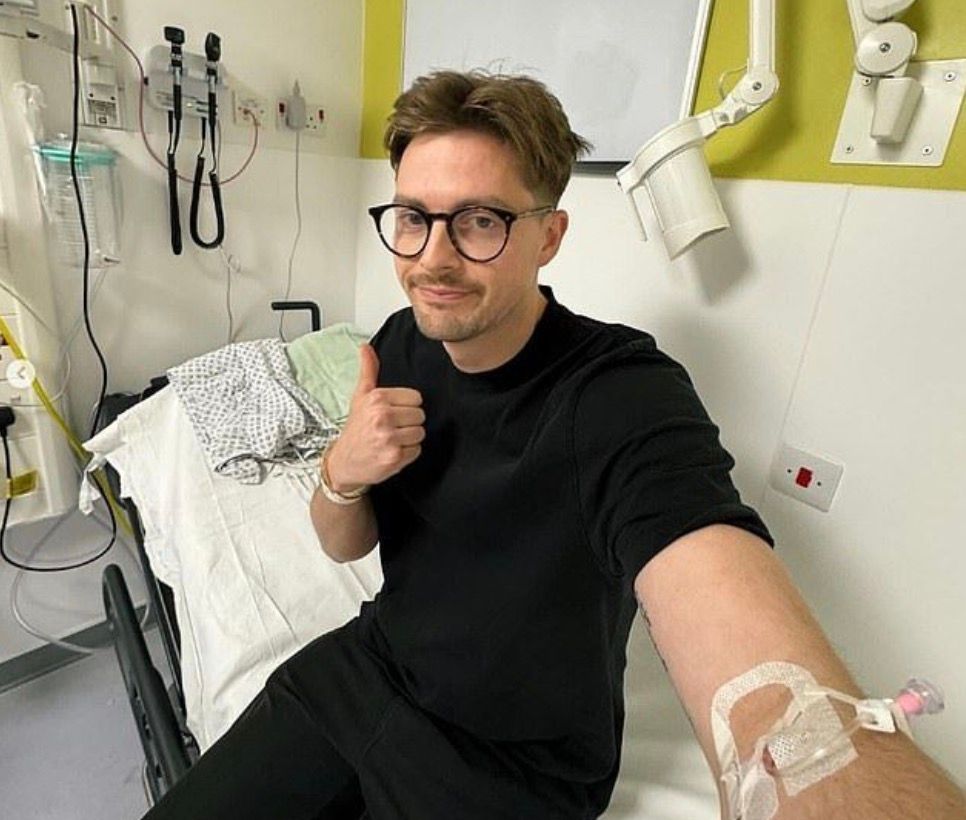
The news broke recently via The Sun: Dr. Alex George revealed that he uses Botox to help manage PTSD-related facial tics. Known first as a contestant on Love Island and now as the UK Youth Mental Health Ambassador, Alex is once again changing the conversation around mental health care.
From Tragedy to Advocacy
In 2020, Alex lost his younger brother, Llŷr, to suicide. The grief and trauma that followed triggered severe facial tics connected to PTSD and anxiety. These involuntary movements—centered around his forehead, nose, and mouth—often worsened when he faced the pressure of public life.
Rather than hiding his struggles, Alex chose to share them. His openness continues to challenge the stigma around men’s mental health and encourages others to seek help in whatever form they need.

Why Botox?
When most people think of Botox, they picture cosmetic procedures. For Alex, however, Botox serves a very different purpose. The treatment helps relax the muscles that trigger his tics, reducing both the physical discomfort and the emotional stress of being visibly affected in public.
“I don’t use Botox for vanity,” Alex explained. “I use it to feel comfortable enough to live my life without constant fear of people staring.”
By speaking openly, Alex reframes Botox as a medical and mental health tool, not just a cosmetic one.

A Holistic Healing Journey
Botox is only part of his recovery toolkit. Alex has also quit drinking, committed to regular fitness, and launched #PostYourPill—a campaign encouraging people to normalize taking prescribed medication for mental health.
His story illustrates an important truth: healing is rarely straightforward. It often requires a mix of tools, practices, and supports, some of which may surprise us.

Why His Story Matters
A man using Botox to manage PTSD isn’t a headline we see often—but it should be. Every story like Alex’s helps expand our understanding of what self-care can look like.
By normalizing diverse approaches to healing, from medication to fitness to Botox, we create more space for people to feel safe exploring their own paths.
As Alex shows, coping doesn’t need to look one way—it just needs to work for you.
Join a Support Group: sharewellnow.com/online-support-groups
Join an Expert Coaching Group: https://sharewellnow.com/expert-coaching-groups